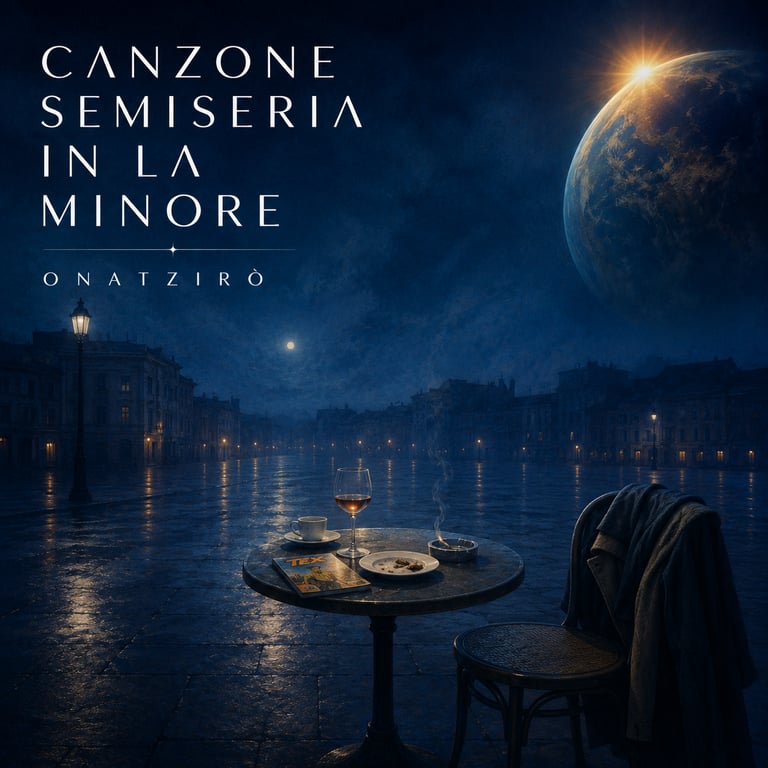
09 A SEMI-SERIOUS SONG IN A MINOR
What a squalid little evening:
A cutlet, a comic, coffee too,
And that moon above, so pallid,
Has the nerve to make me think of you.
Of you, so far away now,
Who knows where you may be?
You, whom I miss already,
More than ever, far from me.
What a squalid little evening:
I pull on my jacket, coat, and go.
All the air around is humid;
The city feels like somewhere I don’t know.
I walk at a measured pace,
Breathing soft and slow;
I return home weary,
With my spirits sinking low.
What a squalid little evening,
Like a tango with no casqué;
I clear away the table
And drown myself in one more rosé.
Then I smoke again,
And I feel alone;
This horrid little habit
Is the only friend I own.
I’d like to shout, “I love thee,
For you are all my life!”
But then I feel ridiculous,
And leave the words inside.
A cutlet, a comic, a coffee. And suddenly the world collapses.
In this jaunty yet melancholy tango, her absence turns an ordinary evening into a small private tragedy. He is left alone with the table to clear, one glass of rosé too many, the damp city, smoke for company, and a pallid moon with the appalling taste to make him think of the very person who is not there.
The drama, naturally, is immense. Or perhaps it is not.
The song plays with the disproportion between the simplicity of the situation and the intensity with which it is experienced: an almost comical domestic loneliness which, nevertheless, we all recognise. An ordinary, even banal day expands until it becomes a universal story—for it takes very little—a joyless supper, an aimless walk, an excessively silent house—to discover how much space can be occupied by someone who is absent.
Like a tango without its casqué, the evening loses its balance, its elegance, its ending. He remains there, with his love held back on the tip of his tongue, too sincere to be spoken without making him feel faintly ridiculous.
And so he does not cry, “I love thee.” But the song, in the end, says it for him.
Contact
Get in touch to discuss a collaboration—or simply to satisfy your curiosity.
© 2026. All rights reserved.


